
What You Need to Know About New Rules, Discounts & Future Changes
London’s Congestion Charge has long been a cornerstone of the capital’s efforts to curb inner-city traffic congestion. Introduced in 2003, the scheme has evolved over the years, with several discounts and exemptions introduced to encourage cleaner vehicle use. Most notably, EVs have enjoyed full exemption under the Cleaner Vehicle Discount (CVD). However, TfL (Transport for London) now proposes significant changes that will reshape that landscape.
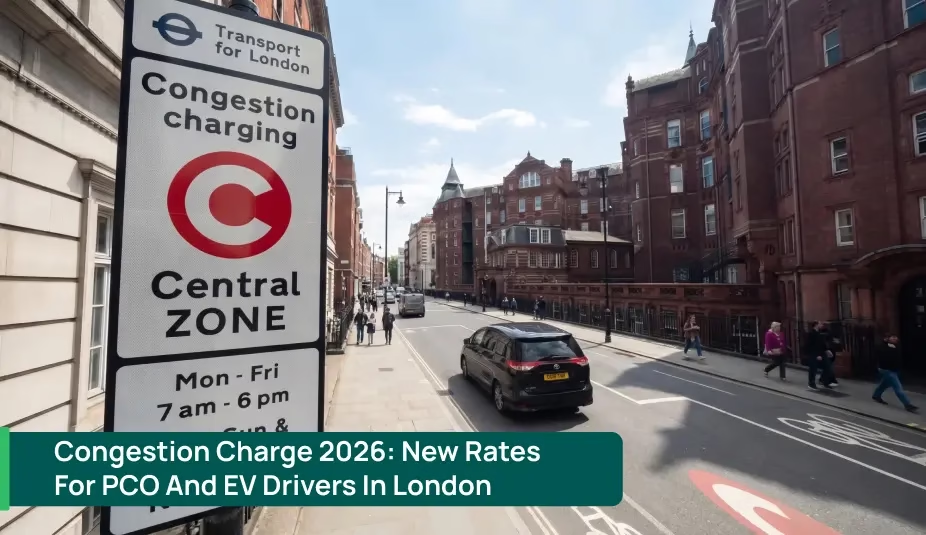
1. Charge Increase from £15 to £18 Daily (From 2 January 2026)
From 2 January 2026, Transport for London (TfL) raised the Congestion Charge from £15 to £18 per day — the first rise since 2020. The update helps manage growing traffic as more electric vehicles enter central London.
Future increases will follow annual reviews linked to Tube fare changes, keeping pricing consistent across the city’s transport system.
2. End of 100% EV Discount (Cleaner Vehicle Discount Expires December 2025)
The Cleaner Vehicle Discount (CVD), which gave pure electric vehicles full exemption from the Congestion Charge, ended on 25 December 2025. From January 2026, EVs are no longer exempt and must pay the daily charge, though partial discounts apply through Auto Pay.
This change follows Transport for London’s long‑term plan set out when the CVD was introduced in 2018, aiming to keep congestion levels under control as EV numbers rise.
3. New EV Discounts via Auto Pay (From January 2026)
From 2 January 2026, electric vehicles no longer receive full exemption from the Congestion Charge. However, drivers who register for Auto Pay now get a 25% discount, reducing the daily cost from £18 to £13.50.
For electric vans and HGVs, the Auto Pay discount is 50%, bringing their daily charge to around £9.
These discounts encourage automatic payments and help TfL manage congestion more efficiently
4. Further Discount Reductions in 2030
From March 2030, Transport for London will tighten the discount structure again.
- EV cars will see their Auto Pay discount fall to 12.5%, pushing the daily charge to around £15.75 (or higher if rates rise).
- EV vans and HGVs will have their discount reduced to 25%.
These changes form part of TfL’s long‑term plan to gradually phase out EV discounts as electric vehicles become more common across London.
5. Residency Discount Adjusted
Residents living within the congestion zone currently receive a 90% discount. From March 2027, this will only apply to electric‑vehicle owners. Non‑EV residents will lose the discount, while existing EV applicants will keep it if they renew on time.
The change supports TfL’s plan to encourage cleaner vehicles and reduce traffic in central London.
Why These Changes Are Proposed
Transport for London (TfL) says the rapid growth in electric vehicles—driven by air‑quality goals and net‑zero targets—has started to undermine the congestion charge’s purpose. Modelling shows that without reintroducing charges for EVs, around 2,200 extra vehicles could enter the zone on a typical weekday, increasing congestion and reducing the scheme’s effectiveness.
Industry and Stakeholder Reaction
The business community has voiced strong concerns. More than 40 companies—including Ocado, the AA, and Openreach—signed an open letter urging the Mayor to reconsider charging electric vans. They warned that the move could discourage EV adoption and slow investment in greener fleets.
What This Means for EV Drivers & Future Infrastructure
EV owners should note that the exemption has now ended. While Auto Pay offers a modest discount, drivers will still face rising costs over time. For electric commercial fleets, these new charges could noticeably increase operating expenses.
On a positive note, EV‑charging infrastructure in London and across the UK continues to expand. The number of public charging points grew by around 38% in 2024, reaching nearly 74,000, including more than 3,000 new ultra‑rapid chargers. This progress helps ease the practical challenges of EV ownership in busy urban areas.
Summary Table: EV Congestion Charge Changes
| Date | Charge for EVs (Auto Pay) | Discount Structure |
|---|---|---|
| Before 25 Dec 2025 | £0 — full exemption | 100% discount (CVD) |
| 25 Dec 2025 – 1 Jan 2026 | Transitional period — CVD expires | EVs begin to be charged at £15/day |
| From 2 Jan 2026 | £13.50 (with Auto Pay on £18 baseline) | 25% discount for EV cars; 50% for vans |
| From March 2030 | ≈ £15.75 (with Auto Pay) | 12.5% discount for cars; 25% for vans |
| From March 2027 (Residents) | Only EVs eligible for 90% residents’ discount | Others lose that discount |
Final Thoughts
London’s congestion‑charging scheme continues to evolve, balancing the push for greener transport with the need to manage traffic efficiently. While electric vehicles remain central to the city’s net-zero vision, Transport for London (TfL) aims to restore the charge’s deterrent effect as EV numbers grow. For both private and commercial drivers, this means rethinking costs, routes, and travel timing.
The public consultation runs until 4 August 2025, with final decisions expected later in the year. Changes will take effect from late 2025 and early 2026. For up-to-date guidance on Auto Pay registration and discount eligibility, visit the official TfL website.