
How the 2026 planning changes could reshape home EV charger installations in London
The Government has confirmed changes to planning rules for electric vehicle charge points — a move set to reshape how London homeowners install chargers, especially where no private driveway exists.
London is already one of the busiest parts of the UK for EV charging, but installing a home charger is not always straightforward. For terraced houses, flats and properties without off‑street parking, the new rules could be significant.
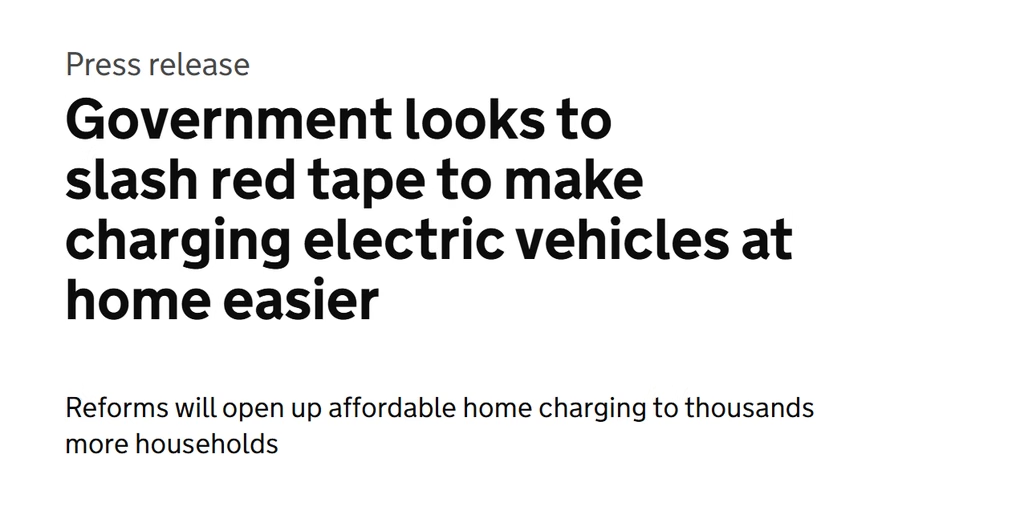
Government confirms EV charger planning changes
The changes relate to Permitted Development Rights for EV charging, designed to make installations easier while keeping safeguards in place.
The Government intends to introduce secondary legislation in Autumn 2026, subject to Parliamentary time.
This does not mean every London home can immediately install a charger across the pavement — local requirements and the final legislation will still matter.
London’s parking challenge
For homes with a driveway, installation is usually simple: the charger sits on private property and the cable stays within the boundary.
But many London properties do not have driveways. Terraced houses, converted flats and homes with only on‑street parking face the same question:
Where can you charge your car overnight?
Public chargers help, but home charging remains more convenient. The proposed changes aim to make some of these situations easier.
Cross‑pavement charging explained
One of the most closely watched provisions is cross‑pavement EV charging, allowing arrangements where the vehicle is parked on the road outside the property.
However, homeowners should not assume they can simply run a cable across a pavement. Safety, accessibility, installation standards and local rules will still apply. The final legislation will set out exactly what is permitted.
Can I install an EV charger at home now?
Yes — if you have suitable off‑street parking, you don’t need to wait.
A qualified installer will typically:
- Check the electrical supply
- Assess the consumer unit capacity
- Recommend a suitable charger
- Install dedicated cabling
- Test and set up smart charging
Every property is different, particularly in London. Older homes, flats and unusual parking arrangements may need a more detailed assessment.
London EV Chargers can carry out a full property assessment and install within 48 hours.
Flats and apartments
For flats, installation is more complex. Key considerations include:
- Ownership of the parking space
- Whether the area is communal
- Electricity supply routes
- Permissions from freeholders or managing agents
- Building electrical capacity
A proper site assessment is often more important than simply choosing a charger.
Will every London homeowner qualify?
No. The changes do not guarantee universal eligibility. Restrictions may still apply depending on property type, location and parking arrangements.
Listed buildings, conservation areas and unusual access points may need additional permissions. Always check the final legislation and local requirements before starting work.
Professional installation remains essential
Planning permission and electrical installation are separate issues. Even where planning permission is not required, the electrical work must meet strict standards.
A professional installer can confirm suitability and highlight potential issues before installation begins — particularly important in London, where properties vary street by street.
What should London homeowners do now?
- If you have a driveway or private parking, arrange a home EV charger assessment now.
- If you rely on on‑street parking, monitor the Government’s final rules on cross‑pavement charging.
- Speak to an experienced installer early to understand requirements and costs.
The bigger picture
London’s public charging network is expanding, but home charging remains central to EV ownership.
The Government’s decision to proceed with changes to Permitted Development Rights could give more homeowners another option — though it will not replace public charging.
For anyone considering an electric car, checking property charging options before purchase is now more important than ever.
Need a home EV charger in London?
London EV Chargers provides specialist installation across the capital, including homes and residential properties.
If you’re unsure whether your property is suitable, arrange an assessment before choosing a charger.
Call 0203 925 7389 or email info@londonevchargers.com to discuss your requirements.
Frequently Asked Questions
Can I install an EV charger without a driveway in London?
Potentially, yes — depending on your parking arrangement and the final rules. The Government’s planned changes specifically address cross‑pavement charging.
When will the new EV charging rules come into force?
Secondary legislation is expected in Autumn 2026, subject to Parliamentary time.
Do I need planning permission for a home EV charger?
Not always. Some installations fall under Permitted Development Rights, but this depends on the property.
Can I run a charging cable across the pavement?
Not without checking the rules. The planned changes are intended to provide a clearer framework for safe cross‑pavement charging.
Is home charging cheaper than public charging?
Often, yes — especially with a suitable home electricity tariff. Savings depend on your tariff, vehicle efficiency and charging habits.