
Who Can Get the £500 EV Charger Grant in the UK in 2026?
If you are thinking about installing an electric vehicle charger at home, you may be wondering whether the UK Government can help with the cost. The good news is that eligible EV owners, renters, flat owners, landlords and businesses may be able to receive financial support towards EV charger installation in 2026.
The EV charging grant landscape has changed over the last few years, and older information online can be confusing. Some websites still mention the previous £350 grant, while the current schemes provide support of up to £500 per chargepoint socket, depending on the scheme and eligibility requirements.
For London EV drivers, this could be particularly useful. Many people live in flats, terraced houses or properties without straightforward private parking, making EV charging more complicated than simply installing a charger on a driveway.
In this guide, we explain what the EV charger grant means in 2026, who may qualify, how much you could receive and what you should do before arranging an installation.
What Is the EV Charger Grant in 2026?
The UK Government provides several schemes designed to support the installation of electric vehicle chargepoints.
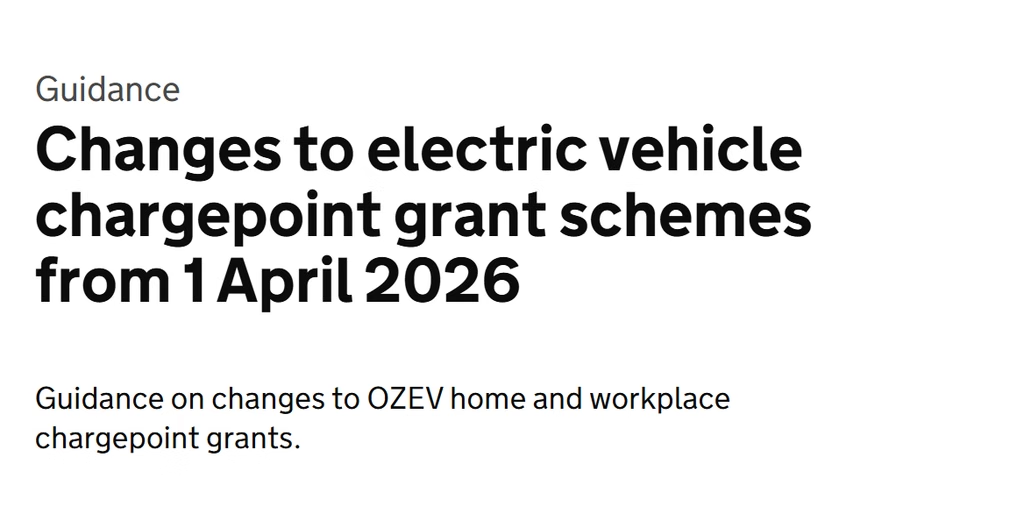
From April 2026, the maximum support available under several of these schemes increased to £500 per chargepoint socket. The current grant arrangements are scheduled to continue until 31 March 2027, subject to the individual scheme rules and available funding.
The important thing to understand is that £500 is the maximum grant, not an automatic £500 payment for every installation.
The amount you receive depends on the scheme you qualify for and the eligible cost of the installation.
For example, if a scheme covers 75% of eligible installation costs up to a maximum of £500, an installation costing £600 could potentially receive £450 of support, while a £1,000 eligible installation could reach the £500 maximum.
This makes checking your eligibility before installation extremely important.
Who Can Get an EV Charger Grant?
The answer depends on your property and circumstances.
The current Government support includes schemes for eligible renters and flat owners, households with qualifying on-street parking, residential landlords, workplaces and other organisations.
For homeowners, the biggest consideration is usually whether you have suitable private parking and whether the property meets the requirements of the relevant scheme.
For renters and flat owners, additional requirements may apply because installing a charger can involve permission from a landlord, freeholder or property management company.
This is particularly relevant in London, where apartment living is common and parking arrangements can be complicated.
Can Renters Get an EV Charger Grant?
Yes, eligible renters can potentially receive support through the EV Chargepoint Grant for Renters and Flat Owners.
The scheme is designed to help people who rent their property or own and live in a flat install an EV chargepoint where the relevant eligibility conditions are satisfied.
The grant can cover a percentage of eligible costs, up to the applicable maximum of £500.
However, renters should not arrange an installation before checking the permission requirements.
Depending on the property, you may need written permission from your landlord or property manager before the installation can proceed.
This is one reason why speaking to an experienced EV charger installer before committing to equipment can make the process much easier.
Can Flat Owners Get an EV Charger Grant?
Flat owners can also potentially qualify.
Installing an EV charger in a flat is often more complicated than installing one at a detached house. There may be shared parking, communal electrical infrastructure, freeholder requirements or restrictions on where cables can be installed.
The good news is that the Government’s current grant arrangements recognise the need to support eligible flat owners.
Before installation, a professional installer can assess the parking space, electrical supply, cable route and charger location to determine what is technically possible.
This is particularly important for London properties, where apartment blocks and shared parking are common.
Can You Get an EV Charger Grant Without a Driveway?
Not having a traditional driveway does not necessarily mean you cannot receive EV charging support.
The Government also has a grant specifically for eligible households with on-street parking.
This type of installation can involve a cross-pavement charging solution that allows a cable to connect the property to the vehicle without creating an unsafe obstruction across the pavement.
Because pavements are public areas, this type of installation requires additional consideration.
Local authority requirements, permissions and the design of the charging solution must all be considered before work begins.
For London residents who park on the street, this could make home charging a much more realistic option.
How Much Is the EV Charger Grant in 2026?
The maximum support available under several current chargepoint grant schemes is now £500 per socket.
This represents an increase from the previous £350 maximum that many older articles still mention.
The increase came into effect from 1 April 2026 as part of the Government’s updated chargepoint grant arrangements.
However, the exact amount you receive depends on the scheme and the eligible installation costs.
This is why it is important to look at the latest Government guidance rather than relying on an older EV charger grant article published several years ago.
What About EV Charger Grants for Landlords?
Residential landlords can also benefit from the current grant system.
The Residential Landlord Chargepoint Grant provides support for eligible landlords installing EV charging infrastructure at qualifying properties.
This can be particularly useful for landlords with multiple rental properties or residential developments.
As electric vehicle ownership increases, EV charging is becoming an increasingly valuable feature for rental properties.
A property with convenient charging can be more attractive to EV-driving tenants, particularly in areas where public charging is expensive or difficult to access.
For landlords, installing charging infrastructure can therefore be both a practical improvement and a way of preparing a property for the growing number of electric vehicles on UK roads.
Can Businesses Get an EV Charger Grant?
Businesses can also benefit from Government support through the Workplace Charging Scheme.
From April 2026, eligible workplaces can receive up to £500 per chargepoint socket, subject to the scheme requirements.
Workplace charging can be useful for employees who drive electric cars, company vehicles and businesses transitioning towards electric fleets.
It can also provide an important benefit for businesses looking to demonstrate their commitment to sustainability.
However, commercial installations are usually more complicated than domestic installations.
Businesses may need electrical upgrades, load management, multiple chargepoints, DNO approval and future expansion planning.
A professional site survey is therefore recommended before deciding how many chargers to install.
How Do You Apply for an EV Charger Grant?
The application process depends on the grant you are applying for, but the first step should always be checking your eligibility.
You will normally need to establish whether your vehicle, property, parking arrangement and proposed chargepoint meet the relevant requirements.
You may then need to obtain a quotation from an authorised installer.
For renters and flat owners, permission from the relevant landlord, freeholder or property manager may also be required.
Once the eligibility and documentation requirements have been confirmed, the appropriate Government application process can be followed.
Using an approved installer can make the process much simpler because they understand the technical and administrative requirements involved in EV charger installations.
Why You Shouldn’t Choose an EV Charger Based Only on Price
The cheapest charger is not necessarily the best charger for your property.
Your EV charger needs to work with your vehicle, electrical supply and charging requirements.
A professional installer will consider factors such as your home’s electrical capacity, cable route, charger position and available protection.
Smart chargers can also provide useful features such as scheduled charging, remote monitoring and integration with certain energy tariffs.
For many London homeowners, the installation itself is just as important as the charger model.
A properly designed installation can provide reliable charging while helping to future-proof your property for another EV or a future charger upgrade.
Why Home EV Charging Still Makes Sense in London
The UK’s public charging network continues to expand, but home charging remains one of the most convenient ways to charge an EV.
Instead of visiting a public charging station after work or during a busy weekend, you can simply plug your vehicle in at home.
Smart charging can also allow you to schedule charging for periods when electricity is cheaper, depending on your energy tariff.
This can make everyday EV ownership easier and potentially reduce charging costs compared with relying exclusively on public charging.
London EV Chargers has previously covered the difference between home and public charging, and the growing discussion around public charging costs makes this subject increasingly important for London EV owners.
Why 2026 Is a Good Time to Check Your Eligibility
If you have been considering an EV charger but postponed the installation because of the cost, 2026 is worth another look.
The maximum support under several relevant schemes has increased to £500, while the current schemes are scheduled to remain available until March 2027.
For London residents, support for renters, flat owners and qualifying households with on-street parking is especially important.
You may not need to own a large house with a private driveway to benefit from EV charging support.
The best approach is to check your individual circumstances and have the property assessed by an experienced installer.
At London EV Chargers, we provide professional EV charger installations for homes, flats, workplaces, landlords and commercial properties across London and within the M25.
Our team includes OZEV-approved installers, and we can help customers understand the available grant options alongside the technical requirements of their installation.
We assess the property, electrical supply, charger location and cable route before recommending a suitable solution.
For more complicated installations, such as apartment blocks and commercial properties, careful planning is particularly important. London EV Chargers also provides solutions involving electrical infrastructure, load balancing, DNO applications and future expansion.
If you are unsure whether you qualify for an EV charger grant, the best place to start is with a professional assessment.
Frequently Asked Questions About EV Charger Grants
Is the EV charger grant still available in 2026?
Yes. Several UK Government EV chargepoint grant schemes are currently available, with the relevant schemes extended until March 2027, subject to eligibility and scheme conditions.
How much is the EV charger grant in 2026?
Eligible applicants can receive up to £500 per chargepoint socket under several current schemes. The exact amount depends on the scheme and eligible installation costs.
Can renters get £500 towards an EV charger?
Eligible renters may qualify for the EV Chargepoint Grant for Renters and Flat Owners. The grant is subject to the scheme’s eligibility requirements and does not automatically provide £500 to every applicant.
Can I get an EV charger grant if I live in a flat?
Yes. Eligible flat owners and renters can potentially apply for the relevant chargepoint grant. However, permissions and parking arrangements need to be considered before installation.
Can I get an EV charger without a driveway?
Potentially, yes. There is a Government scheme for eligible households with on-street parking, which can include a suitable cross-pavement charging solution.
Do I need permission from my landlord?
If you rent your property, you may need permission from your landlord or property manager before installing an EV charger.
Can landlords get EV charger funding?
Yes. Eligible residential landlords can apply for support under the Residential Landlord Chargepoint Grant, subject to the scheme’s conditions.
Can businesses get help paying for EV chargers?
Yes. Eligible businesses and workplaces can potentially use the Workplace Charging Scheme, with support of up to £500 per socket under the current 2026 arrangements.
Does the Government pay the full cost of an EV charger?
No. The grant normally covers a percentage of eligible costs up to the applicable maximum. The £500 figure should therefore be treated as a maximum rather than a guaranteed payment.
Do I need an OZEV-approved installer?
For schemes that require an authorised installer, you must use an installer meeting the Government’s requirements. Using an approved installer also helps ensure that the installation and grant application follow the relevant rules.
What should I do before applying for an EV charger grant?
Check your eligibility, confirm that your vehicle and property meet the requirements, obtain any necessary permissions and speak to an authorised installer about the installation.
Is the EV charger grant available until 2027?
The current relevant schemes have been extended until 31 March 2027, although eligibility requirements and funding arrangements can change. Always check the latest Government guidance before applying.
Final Thoughts
The EV charger grant in 2026 could make installing a home or workplace charger significantly more affordable for eligible UK drivers, renters, landlords and businesses.
With support of up to £500 available under several current schemes, it is worth checking your eligibility before paying for an installation yourself.
For London drivers, the options are particularly useful because not everyone has access to a conventional driveway. Renters, flat owners and some households with on-street parking may also have routes to installing convenient home charging.
If you are considering an EV charger, don’t rely on outdated information or assume that you are not eligible.
Speak to London EV Chargers today to discuss your property, charging requirements and available grant options.