
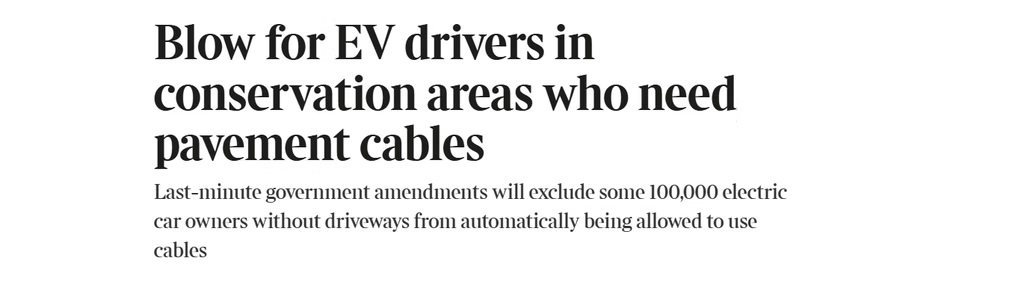
New October 2026 charging rules bring opportunities for some households, but conservation-area restrictions could make installation more complicated.
London is full of older terraces, period streets and designated conservation areas. For electric vehicle owners, these settings pose a practical question: how do you charge at home when there’s no driveway, parking is on‑street, and planning rules are stricter?
From 21 October 2026, new rules in England aim to make home charging easier. But the position is not uniform. If your property sits in a conservation area, you’ll need to understand the exceptions before making plans.
Why conservation areas complicate EV charger installation
Conservation areas protect architectural and historic character. They are widespread across London, covering traditional terraces and heritage streets.
Installing a charger at a modern home with a driveway is usually straightforward. At older properties, especially without off‑street parking, the situation is more complex. It’s not just about the charger itself — the property, parking, cable route and planning requirements all need to be considered together.
What changed in October 2026?
The Government has updated permitted development rights for domestic EV chargepoints, including cross‑pavement solutions. These allow a cable to run through a purpose‑built channel in the pavement rather than trailing across a footway.
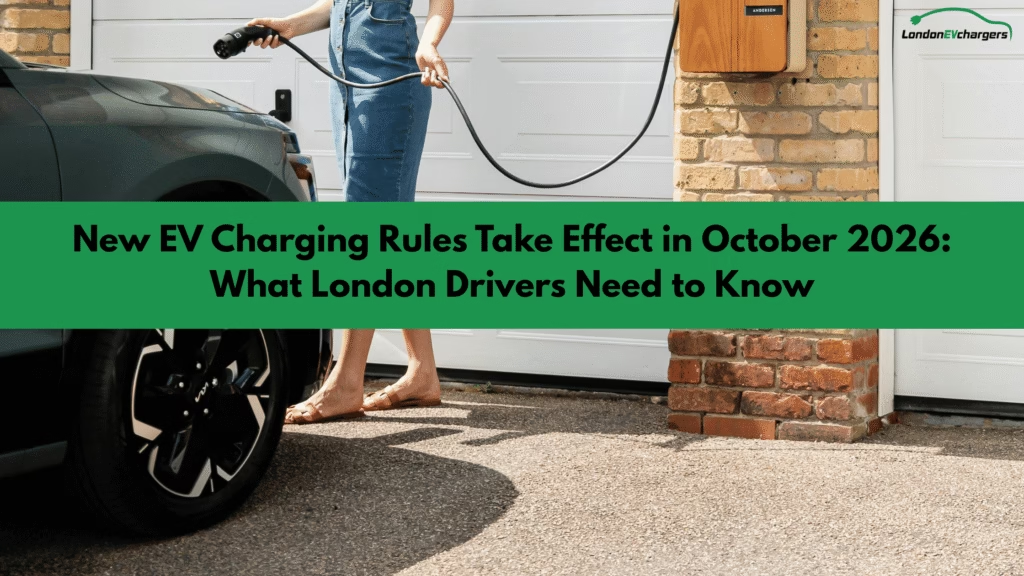
The aim is to simplify charging for households that park on the street. But the streamlined route does not apply in the same way to conservation areas. Local planning requirements remain, and listed buildings need particular care.
In short: the new rules help many households, but they don’t override conservation‑area protections.
Can you install an EV charger in a conservation area?
Possibly — but it depends on your property and the installation.
- Driveways/private parking: Often feasible, with fewer planning hurdles.
- On‑street parking: More complicated. Pavement channels or external equipment may need specific approval.
- Listed buildings: Always require careful assessment.
Before committing to equipment or installation costs, check:
- Property status (conservation area or listed)
- Parking arrangements (private vs public)
- Planning authority requirements
- Highway authority approval for pavement works
- Electrical suitability, assessed by a qualified installer
Early checks can save wasted spend on equipment that cannot be installed.
Flats and properties without driveways
For many Londoners, the issue is not the charger itself but the lack of a suitable installation point.
Flat owners may need consent from freeholders or managing agents. Shared parking areas raise questions about electrical capacity and how charging is managed between residents.
Where vehicles are parked on the street, conservation‑area restrictions mean the new rules may not provide an immediate solution. Public charging and council‑run schemes remain vital alternatives.
Planning an installation
At London EV Chargers, we know every property is different. The right solution depends on more than the charger’s power rating.
- For homes with private parking, we assess location, cabling and electrical supply.
- For flats and commercial sites, we consider shared infrastructure, permissions and future demand.
- For conservation‑area properties, we advise on planning requirements before any work begins.
Get advice before committing
The October 2026 changes are progress, but they don’t remove every barrier. Conservation‑area rules and on‑street parking realities mean some households will need a different approach.
If you’re considering an EV charger for your London home, flat or business, London EV Chargers can help you assess requirements and plan the next steps.